
Read this once
Propane Safety
Propane is safe when it is handled properly and unforgiving when it is not. This is the short version of what actually matters.
None of this is complicated. It is six habits, and once you have them they cost you nothing. The people who get hurt with propane are almost never people who knew these and ignored them. They are people who never heard them.
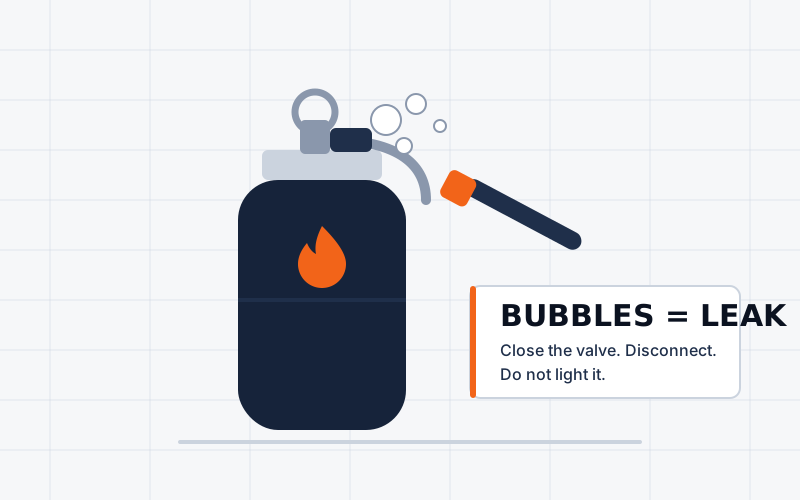
The one worth learning properly is the leak test. Soapy water on the joint, valve opened slowly, and you watch. Bubbles mean gas is escaping, and gas escaping means you do not light it.
-
Store it outdoors, upright, always
A 20lb cylinder never comes indoors. Not the apartment, not the basement, not the hallway, not a closet, and not an enclosed garage. Outdoors, standing upright, on a flat surface, out of direct sun. A tank on its side can feed liquid propane into the hose instead of vapour, which is exactly what you do not want.
-
Test every new connection with soapy water
Connect the regulator hand tight, no wrench. Then brush a mix of dish soap and water over the valve and the connection, and open the tank valve slowly. If bubbles grow, gas is escaping. Close the valve, disconnect, and try again. If it still bubbles, do not light it.
-
Never run a propane heater in an enclosed space
Patio heaters are for open air. Do not run one indoors, in a garage, or inside a seating area you have wrapped in plastic or tarps to keep the wind out. That enclosure is what turns a heater into a carbon monoxide hazard, and it is the most common dangerous mistake made with propane in this city.
-
Open the lid before you light the grill
Gas pools. Lighting a closed grill that has been quietly filling with propane produces a fireball. Lid open, then ignite. If it does not light within a few seconds, turn everything off, leave the lid open, and wait five minutes before trying again.
-
Do not transport a tank in a closed vehicle
This is one of the reasons we deliver. A cylinder rolling around a hot, sealed trunk is genuinely dangerous. If you ever do move one yourself, keep it upright, secured, and with a window open, and never leave it in a parked car.
-
Cylinders expire
The manufacture date is stamped on the collar. A cylinder needs requalifying twelve years after that date. If yours is old, badly rusted, dented, or the valve is damaged, retire it. Tell us when you order and we will bring you a new one instead.
If you smell gas, do not call us first
Get everyone away from the tank. Do not flick a light switch, do not use a phone next to it, do not light anything: a spark is all it takes. If you can reach the cylinder valve safely, close it.
Then, from a safe distance, call 911. A suspected gas leak is an emergency service call, not a delivery call. Ring us afterwards and we will replace the cylinder.
A note on what we are not
We deliver cylinders. We are not gas fitters, and we do not install, service or repair grills, heaters, regulators or hoses. If your regulator is leaking, your hose is cracked, or your appliance is not working properly, that is a job for a qualified technician, not a delivery driver and not a YouTube video.
For the authoritative guidance on handling propane, the Propane Education & Research Council publishes safety material worth reading, as does the National Fire Protection Association on grilling specifically.
Need a fresh cylinder?
If your tank is old, rusted or damaged, do not risk it. Call or text and we will bring you a new one.